Full day sessions
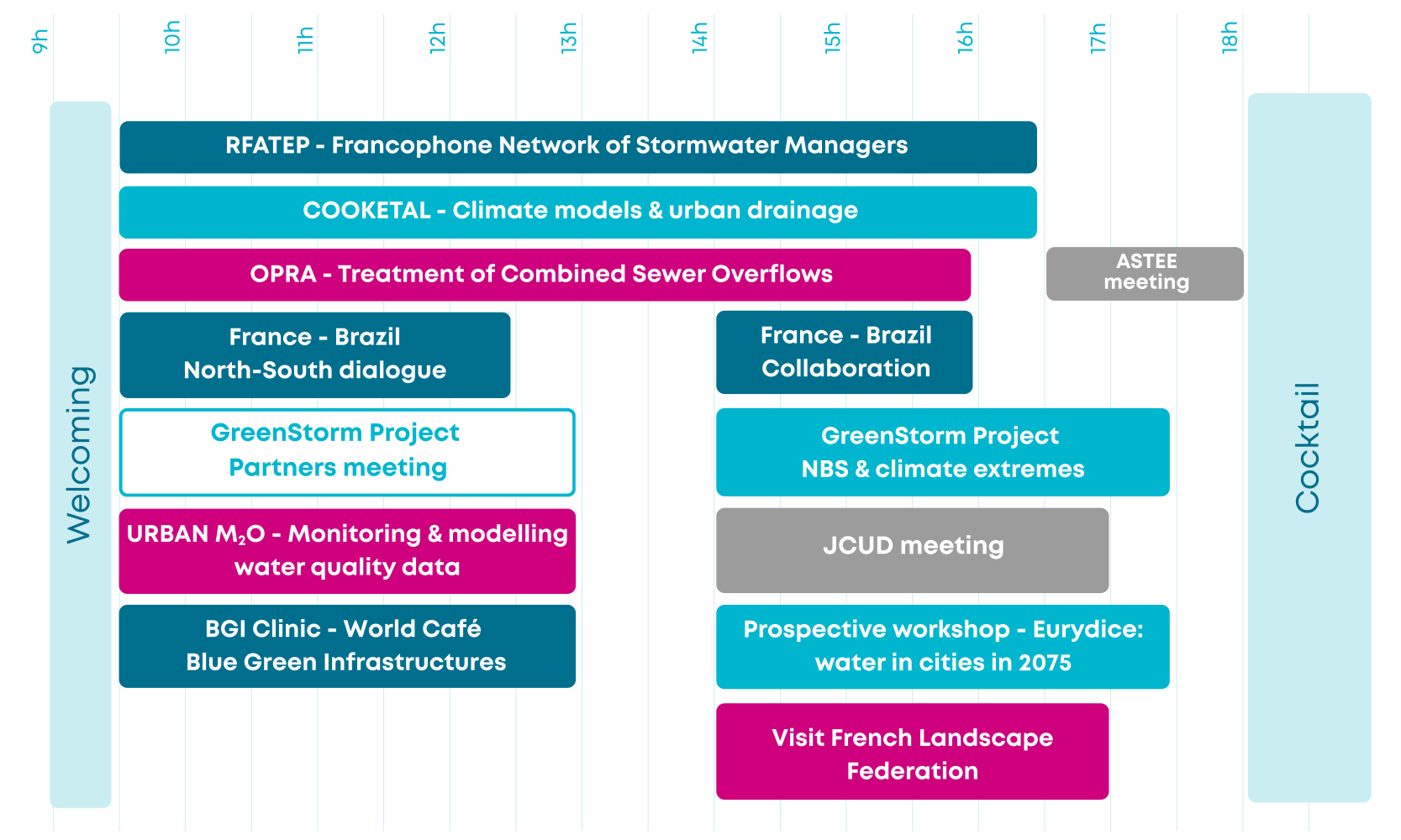
RFATEP - Francophone Network of Territorial Stormwater Facilitators
Schedule I 9:30 AM - 4:30 PM
Organizers: GRAIE (Elodie Brelot, Elisabeth Gallien) and ADOPTA (Franck Degrasse, Geoffrey Houpe)
Target audience: FATEP network members and French-speaking stormwater facilitators
Language: French (note: there will be no translation offered at this workshop)
Objective: Identify the challenges of support and guidance in order to overcome barriers and resistance to change; share experiences related to awareness-raising and support through practical workshops; and jointly define working methods enabling real cross-sector collaboration that supports source control of stormwater in development projects.
Why participate: Are you a project officer, local authority staff member, or facilitator working in the associative sector, directly involved in or concerned with source control stormwater management? Join the RFATEP network and benefit from dynamic activities throughout the year.
Why participate: Are you a project officer, local authority staff member, or facilitator working in the associative sector, directly involved in or concerned with source control stormwater management? Join the RFATEP network and benefit from dynamic activities throughout the year.

COOKETAL - Translating Climate Model Results for Urban Drainage Applications
Schedule I 9:30 AM - 4:30 PM
Organizers: Climate Change Adaptation Sub-Working Grou^p of Urban Rainfall, with support from H20'Lyon and OTHU (Lauren Cook, Vincent Pons, Thomas Einfalt, Flora Branger)
Target audience: Scientists and specialists / Language : English (note: no translation will be offered at this workshop)
Objective: Better inform the urban drainage community about the use of climate model outputs, while standardizing best practices associated with their use and encouraging knowledge transfer from the climate science community.
Why participate: This meeting will provide an overview of the different methodological approaches, guidelines, and practical techniques for using climate model results in urban drainage modelling.
OPRA - Protection and restoration of urban biodiversity by enhancing treatment wetlands for combined sewer overflows
Schedule I 9:30 AM - 4:00 PM
Organizers: International research project OPRA (Coordinator: Katharina Tondera)
Target audience: Open to all participants involved in combined sewer overflow treatment
Language: English (note: no translation will be offered at this workshop)
Objective: Stimulate exchanges on combined sewer overflow treatment practices across the European Union and the opportunity to join a stakeholder committee to follow and support the progress of the OPRA project.
Why participate: A chance to share your experience on combined sewer overflow treatment and/or discover the practices of other water professionals.
Why participate: A chance to share your experience on combined sewer overflow treatment and/or discover the practices of other water professionals.
Morning only sessions
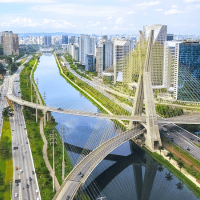
France-Brazil - Urban Hydrology: North-South dialogue
Schedule I 9:30 AM - 12:30 PM
Organizers: UNESCO Working Group on Urban Water and Human Settlement in Latin America and the Caribbean (Nilo Nascimento)
Target audience: Open to all
Language: English (note: no translation will be offered at this workshop)
Objective: Foster exchanges on urban water management in different environmental and socio-economic contexts and identify opportunities for cooperation.
Why participate: Share experiences and knowledge about urban water management in different contexts and learn about innovative initiatives and lessons learned.

GreenStorm - Project Partners Meeting
Schedule I 9:30 AM - 1:00 PM
Organizers: GreenStorm project (Marie-Christine Gromaire - ENPC/LEESU, Jérémie Sage - CEREMA)
Target audience: GreenStorm project partners only
Language: English (note: no translation will be offered at this workshop)
Objective: Bring together the partners of the GreenStorm project.
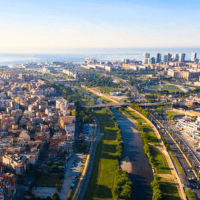
URBAN M2O - "Water Wise" cities: which water quality data do we need to tackle urban pollution?
Schedule I 9:30 AM - 1:00 PM
Organizers: URBAN M2O - EU Horizon project (Luca Vezzaro - Technical University of Denmark - DTU)
Target audience: Open to all
Language: English (note: no translation will be offered at this workshop)
Objective: Discuss the water quality data required by urban water managers, present future water management scenarios aimed at reducing pollution emissions from urban areas, and map the current level of digital maturity of European cities.
Why participate: This session will give you the opportunity to follow the latest developments in water quality monitoring and modeling tools, to better understand water quality in urban environments. Your experiences and needs will directly influence the progress of the URBAN M2O project and help provide future water professionals with relevant and appropriate tools.
Why participate: This session will give you the opportunity to follow the latest developments in water quality monitoring and modeling tools, to better understand water quality in urban environments. Your experiences and needs will directly influence the progress of the URBAN M2O project and help provide future water professionals with relevant and appropriate tools.
BGI Clinic - World Café: Co-Creating Solutions from Practical Experience
Schedule I 9:30 AM - 1:00 PM
Organizers : International working group on Blue-Green Infrastructures (iBGI) of the IWA / IAHR Joint Committee on Urban Drainage (JCUD) (Luis Sañudo, Peter Bach, Martijn Kuller and Veljko Prodanovic)
Target audience: Open to all
Language: English
Objective: Leverage the collective knowledge of the BGI community in a context of deep uncertainty (climate change, uncontrolled urbanization, etc.), move beyond the usual academic approach, and focus on gathering practical experiences from global experts facing real-world challenges, with the aim of creating a practice-based co-creation space. Global challenges and collaboration opportunities will be presented and discussed, leading to the creation of a unified database of international BGI practices (to be developed later as an online tool).
Why participate: An opportunity to take part in a participatory experience, discover key challenges in the field, exchange with international experts, and co-create solutions for the future. Bring your BGI project to compare it with experiences from other countries and climates, or come to gather ideas and new perspectives to enrich your local initiatives.0
Why participate: An opportunity to take part in a participatory experience, discover key challenges in the field, exchange with international experts, and co-create solutions for the future. Bring your BGI project to compare it with experiences from other countries and climates, or come to gather ideas and new perspectives to enrich your local initiatives.0
Afternoon only sessions

France-Brazil - Urban Hydrology: collaboration prospects
Schedule I 2:00 PM - 4:00 PM
Organizers: LEESU ENPC (Martin Seidl) and EHR UFMG (Priscilla Moura), within the framework of the CAPES-COFECUB 2026 program
Target audience: Open to all (note: no translation will be offered at this workshop)
Language: English
Objective: To exchange on scientific topics in urban hydrology between the two countries, highlighting both similarities and differences while considering their respective geographical and urban contexts; and to prepare potential joint research projects.
Why participate: Share experiences, build connections between related research projects, learn from one another, and initiate new collaborative initiatives such as researcher and student mobility, joint PhD supervision, co-authored publications, and a more effective collective exploration of existing funding instruments, such as CAPES (Brazil), ANR (France), and the European Water4All programme.
Eurydice prospective workshop - Envisioning Urban Water Management in 2075 in France and Europe
Schedule I 2:00 PM - 5:30 PM
Organizers: EURYDICE (Christine Gandouin, Jean-Pierre Tabuchi)
Target audience: Open to all
Language: French (note: no translation will be offered at this workshop)
Objective: To reflect on the impacts of climate change, resource availability, and broader global change on the role and management of water in cities by the year 2075.
Why participate: Engaging in a diversity of perspectives on possible futures for urban water management helps broaden our understanding of the transformations that may occur in the coming decades. Developing narratives of future scenarios allows participants to immerse themselves in potential futures, engage stakeholders and colleagues, and prepare for emerging challenges. It also provides an opportunity to explore issues that are still underdeveloped today but will become critical for the cities of tomorrow.
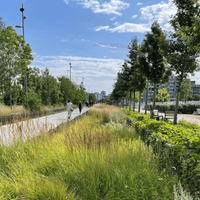
GreenStorm - Designing climate extreme resilient and socially embedded nature-based solutions for urban stormwater management / FULLY BOOKED
Schedule I 2:00 PM - 5:30 PM
Organizers: GreenStorm project (Marie-Christine Gromaire - ENPC/LEESU, Jérémie Sage - CEREMA)
Target audience: Open to all / Language: English (note: no translation will be offered at this workshop)
Objective: To share insights developed within the European GreenStorm project regarding the resilience of Nature-Based Sustainable Urban Drainage Systems (SUDS) to climate extremes, particularly drought, and to discuss possible design strategies to enhance this resilience.
Why participate: Address key challenges related to water availability and plant development within sustainable urban drainage systems, and contribute to discussions on designing resilient SUDS in collaboration with scientists and practitioners.
Why participate: Address key challenges related to water availability and plant development within sustainable urban drainage systems, and contribute to discussions on designing resilient SUDS in collaboration with scientists and practitioners.
JCUD - Annual Meeting of the Joint Committee on Urban Drainage
Schedule I 2:00 PM - 5:00 PM
Organizers: IWA / IAHR Joint Committee on Urban Drainage (Manfred Kleidorfer, Alma Schellart)
Target audience: Open to all
Language: English (note: no translation will be offered at this meeting)
Objective: To review recent activities, ongoing initiatives, and future projects of the JCUD.
Why participate: Gain insight into scientific directions, methodological developments, and collaborative initiatives shaping international research in urban drainage.
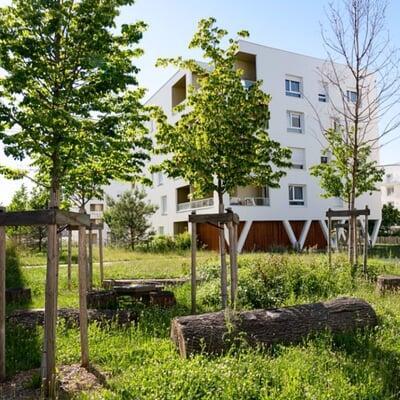
French Federation of Landscape Architects – From industrial to urban landscape at Carré de Soie: a guided exploration of water management
Schedule I 2:00 PM - 5:00 PM
Organizers: French Federation of Landscape Architects
Target audience: Open to all
Language: French (note: no translation will be offered at this workshop)
Objective: To illustrate concretely how urban landscape design can integrate stormwater management solutions to enhance climate resilience and multifunctionality in public spaces.
Why participate: Discover innovative urban developments, exchange with experts, and enrich your professional practice with transferable ideas for your own projects.
Why participate: Discover innovative urban developments, exchange with experts, and enrich your professional practice with transferable ideas for your own projects.
Astee - Stormwater and Urban Development Commission / FULLY BOOKED
Schedule I 4:30 PM - 6:00 PM
Organizers: ASTEE (Mathilde Silvert)
Target audience: Open to all
Language: French (note: no translation will be offered at this workshop)
Objective: To facilitate exchanges among a diverse range of stakeholders involved in stormwater management, including project owners, developers, urban planners, hydrologists, landscape architects, and infrastructure engineers.
Why particiate: Stay informed, share advice, and learn from practical feedback and experiences that can be applied within your own territory.